What Are Some Interesting Facts About Art and Culture in Congo
Ane of Congo's greatest contributions to contemporary African culture has been its music, peculiarly the orchestra music that developed in the 1960s. The kickoff authentic Congolese musicians were troubadors of the 1940s and 1950s, travelling to perform primarily in the more remote provinces. Among the early troubadors were Antoine Wendo Kolosoyi, Tête Rossignol, Paul Kamba, Polidor, Jean-Bosco and Colon gentil. They travelled as soloists only equally the music developed, the solo acts became groups, adding African drums and acoustic guitars. Antoine Kasongo, Tekele (believed to exist the starting time female music star), and Odéon Kinois were amongst the first leaders of groups. Traditional music was given up past younger generations equally they were shifting towards new forms and adding more than instruments.
The first recordings of Congolese music were made past colonial museums in 1947. At near 1953, Joseph Kabasele, ane of the founding fathers, formed the African Jazz Orchestra and fabricated a few records. Luambo Makiadi Franco, the first to begin playing cha-chas, formed the O.Thou. Jazz Orchestra. The influence of Cuban and Latin music began to be felt in the late 1950s. A number of Latin American records were adapted and recorded past Congolese groups. These included "Kay-Kay", "Son", "Tremendo", "L'Amor" , and "Lolita". Well-nigh composition of songs in this period have Latin rhythms and Congolese lyrics with such classics every bit "Indépendance Cha-cha" by Tabu Ley Rochéreau to commemorate independence, and "Cha-cha-cha de Amor" past Luambo Franco. "Congo Jazz" is used mostly to describe Congolese orchestral music, with Franco, Rochéreau, and Docteur Nico amidst the almost popular musicians. The term "Soukouma" (Lingala for "milk shake") had been introduced and gradually became the dominant form of music by the tardily 1960s. Congolese music has become one of the most pop in Africa past this time. By the late 1970s, equally the number of bands had multiplied and the music considerably pluralized, some leaders incorporated disco, jazz, and blues harmonies into their compositions. Others preferred ballads and traditional musical forms. Although many languages were used in the lyrics, Lingala remained the virtually common. Several were created deriving from the African Jazz and OK Jazz, we can name M Zaiko of Manuaku, Viva la Musica of Papa Wemba, Choc Stars of Ben Nyamabo, Victoria Eleison of Emeneya JoKester, Quartier Latin of Koffi Olomide, Empire Bakuba of Pepe Kale, and the group Wenge Musica. This third generation of bands introduced new dances like Cavacha, Griffe Dindon, Caneton, Silauka, Kwassa Kwassa, Ndombolo etc.
Congolese music is near of all dance music, usually favored in large, open-air trip the light fantastic clubs. Kinshasa used to be one of the earliest recording centers in Africa, only economic hardships and shortages of foreign exchange led the industry to decline in the late 1970s, leaving space and opportunities for other African cities like Abidjan and Lagos. Congolese orchestras frequently perform and tape in Paris and Brussels. A few better known artists and orchestras manage to bout or record in the Americas, including Werrason, Koffi Olomide, JB Mpiana, Fally Ipupa, Lokua Kanza, Mbilia Bel, just to proper noun a few.
Abeti Masikini, Mbilia Bel, Tshala Muana, Thousand'pongo Dear, Yondo Sister, Faya Tess, Barbara Kanam are among the nearly popular female person musicians who are celebrated throughout Africa and internationally.
The absence of a recording industry and a express market for art has led a few artists to leave the country and settle abroad. Inside this groupwe notice popular artists like Papa Wemba, Emeneya JoKester, Awilo Longomba, Kanda Bongoman, Lokua Kanza, Makoma,Chico Mawatu, Alain Makaba,Reddy Amisi and many more.
Undoubtedly, Congolese accept music in their blood; and it is ane of the arts through which they've come to best express their outstanding inventiveness. The nearly striking fact is that virtually Congolese musicians are exclusively self-taught and exceptionally gifted.
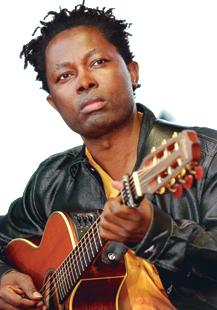 | 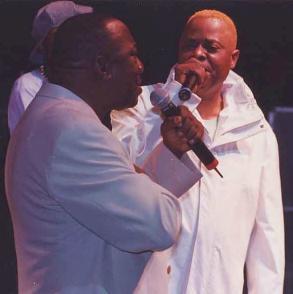 | 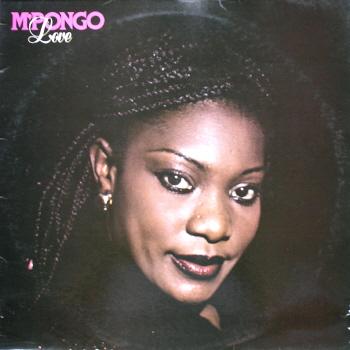 |
| Lokua Kanza | Tabu Ley Rochéreau & Emeneya JoKester | G'pongo Dearest |
 | 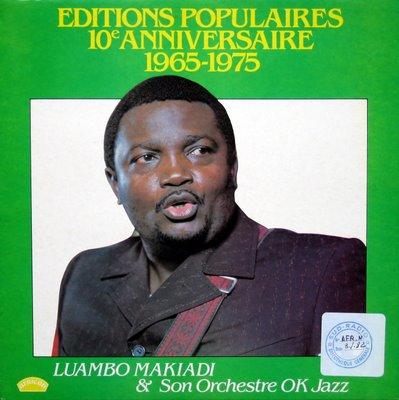 | |
| Abeti Masikini | Luambo Franco |
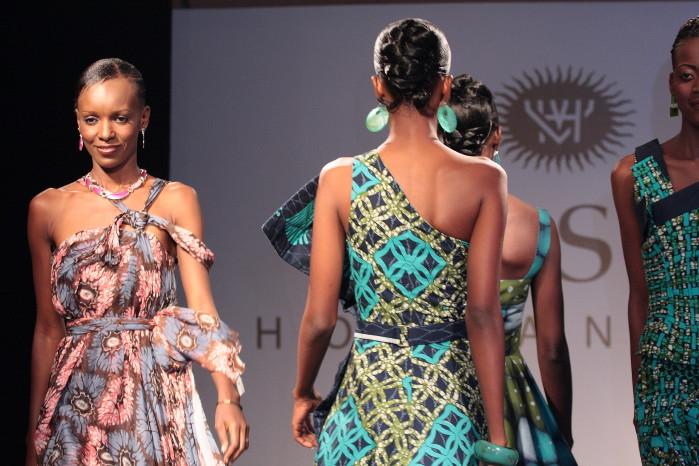
Everything about Congolese mode revolves around the colorful impress fabrics chosen "pagne". The cloth, made in bolts two yards wide, is unremarkably cut for resale into strips 2 to six yards in length. A staple of Congolese culture and dress, many prints are given a proper name. Some are designed and marketed for special purposes, like praising a leader, marking a special result such a summit meeting, soccer tournament, visit by a foreign head-of-state. Traditional aspects of theCongolese fashion have come to blend with influences from European or American way culture. This is most visible in urban areas where younger generations try to keep upwardly with the trends.
Culture is everything; it is our mode of life, and the near powerful strategy for the survival of whatever human society. In this era where global cultures are taking currency over the dying or decomposable ones, information technology becomes imperative, not only to adapt to the macrocultures, just also to try to understand and inquire ways in which local cultures could be prevented from being suppressed or extinguished.
Source: https://friendsofthecongo.org/congolese-culture/
0 Response to "What Are Some Interesting Facts About Art and Culture in Congo"
Post a Comment